
Service
See what your customers feel. Not just what they click.
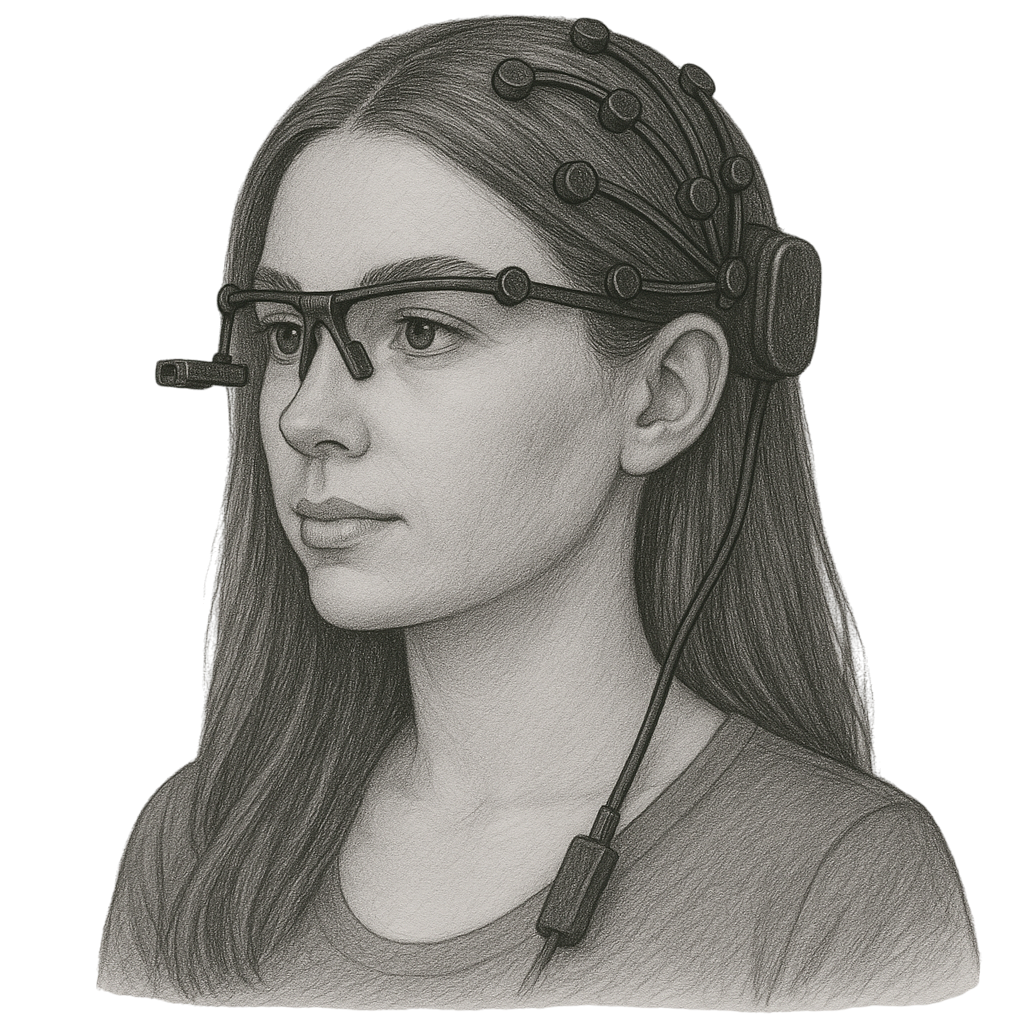
EEG and eye-tracking studies for ads, packaging and webshops. Measure attention, emotion and subconscious reaction so you know what actually works before you spend on it.
What WE test
Three things worth measuring before launch
Ads & creative
Which version holds attention, where the eye goes first, and whether the message lands emotionally before you put media budget behind it.
Packaging & shelf
What gets noticed on a crowded shelf or in a grid of thumbnails, whether the key information is seen, and how the design makes people feel.
Webshop & landing pages
Where attention is wasted, which elements cause hesitation, and whether the path to purchase feels effortless or confusing.
Packages
Pick the depth you need
Eye-Tracking
€7.500 one-off
- Attention
- One asset studied in depth
- 15 participants
- Concrete recommendations
Eye-Tracking + EEG
€18,000 one-off
- Attention + emotional response
- One asset studied in depth
- 30 participants
- Concrete recommendations
FAQ
You probably have some questions
What do EEG and eye-tracking actually measure?
Eye-tracking shows where attention goes: what gets seen first, what gets skipped, and where people get stuck. EEG adds what attention alone can’t tell you: moment-by-moment emotional engagement and cognitive load while someone looks at your ad, packaging or webshop. Together they show how people react, not how they claim they react.
Why not just ask people what they think?
Because people are unreliable narrators of their own behavior. They answer surveys with what sounds reasonable, then act on instinct. The gap between what people say and what they do is exactly where campaigns and designs fail. We measure the reaction itself, before it’s filtered through politeness or rationalization.
When does this make sense instead of an A/B test?
Before launch, when there’s no traffic to test on yet. An A/B test tells you which version wins after you’ve spent budget exposing customers to both. A lab study ranks your variants and tells you why, before a single euro of media spend. For things that are expensive to change later like packaging, a campaign concept, a redesign, testing before launch is the cheap option.
How does a study work in practice?
We define what you need to learn, recruit participants matched to your target customers, and run controlled sessions on research-grade equipment while they view or use your asset.
How many participants does it take? Isn’t that a small sample?
Attention and reaction patterns are far more consistent across people than opinions are, which is why lab studies work with dozens of participants, not thousands. It’s the standard in the field: enough to see reliable patterns, small enough to stay fast and affordable.
Where do the studies take place?
Sessions run in our lab setting in Zagreb, Croatia, inside the EU, which keeps participant data under GDPR from start to finish. If a study needs to happen on location (your market, your store, your event) we travel with the equipment; you cover the travel costs, the rest of the pricing stays the same.
See where your shop leaks revenue for free.
Send your shop’s URL and get a mini-analysis with three concrete, prioritized findings. No call required, no commitment.
Usually delivered within 48 hours